Leak & storm guidance
Water coming in?
Start with safety.
Then arrange an assessment with a qualified local provider. This demonstration cannot send a crew, arrange protection or provide an estimate.
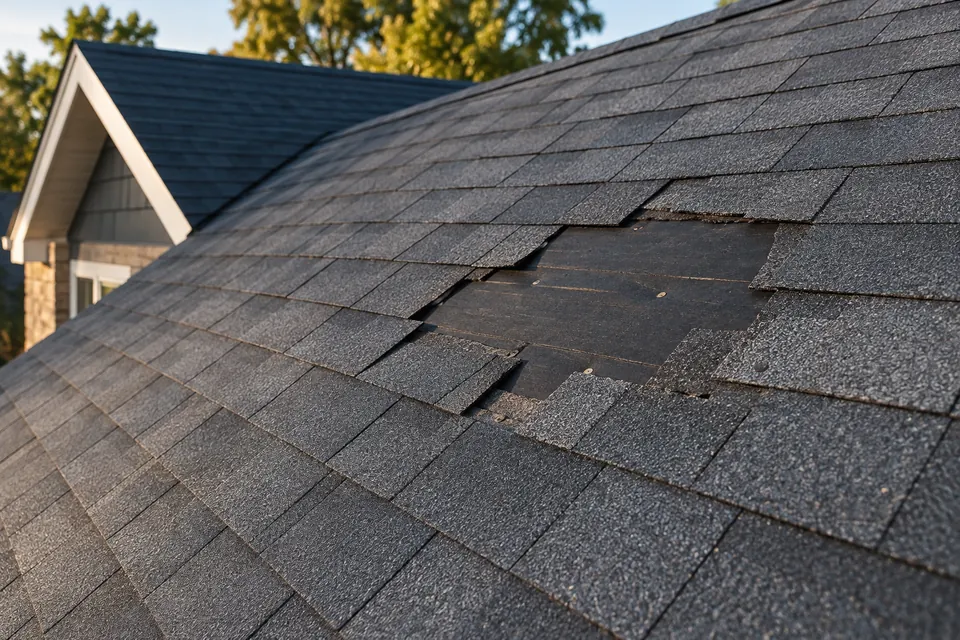
Safety comes first
Visible sagging or immediate danger?
Leave the affected area and keep others away. Contact emergency services if there is immediate danger. Stay off the roof and out of damaged buildings; keep clear of fallen power lines.
What to do next
Keep your distance
Wait until the weather threat has passed. Observe from a safe place on the ground. Stay away from wet electrical equipment, damaged structures and fallen lines.
Contact a real local provider
Explain that water is entering, which rooms are affected and whether visible damage can be seen from a safe location. Ask about assessment availability and whether professional temporary protection is appropriate.
Record what you can safely see
Keep dates, photographs taken from a safe place and relevant messages. If insurance may be involved, contact your insurer for its documentation and repair instructions.
Separate protection from permanent repair
Ask the provider to explain the purpose, limits and cost of any temporary work. A temporary covering does not establish the leak source or complete a permanent repair.
A stain is a clue, not a diagnosis
Water may enter at roof coverings, flashing, penetrations or another part of the building. Its visible arrival point may differ from the entry point. Describe when you first noticed it and whether it changes with weather.
A qualified assessment should explain what was accessible, what was observed and where further investigation is needed. An online image or checklist cannot confirm the cause.
What affects the repair scope?
- The entry point and extent of moisture damage.
- Access, roof shape, material compatibility and weather.
- The condition of underlying decking and surrounding roof components.
- Whether safe temporary protection or additional trades are needed.
If the damage followed a storm
Ask the contractor to document observed conditions without promising insurance coverage. Your insurer determines coverage under your policy; rules and deadlines vary by location. Keep the claims conversation separate from the decision to sign a roofing contract.
Get a clear assessment from a real provider.
Choose someone whose identity, qualifications and written scope you can verify.
Further reading
National Weather Service: after severe weather ↗Washington insurance regulator: after home damage (state-specific resource) ↗General guidance. Local requirements, roof conditions and policy terms need individual confirmation.